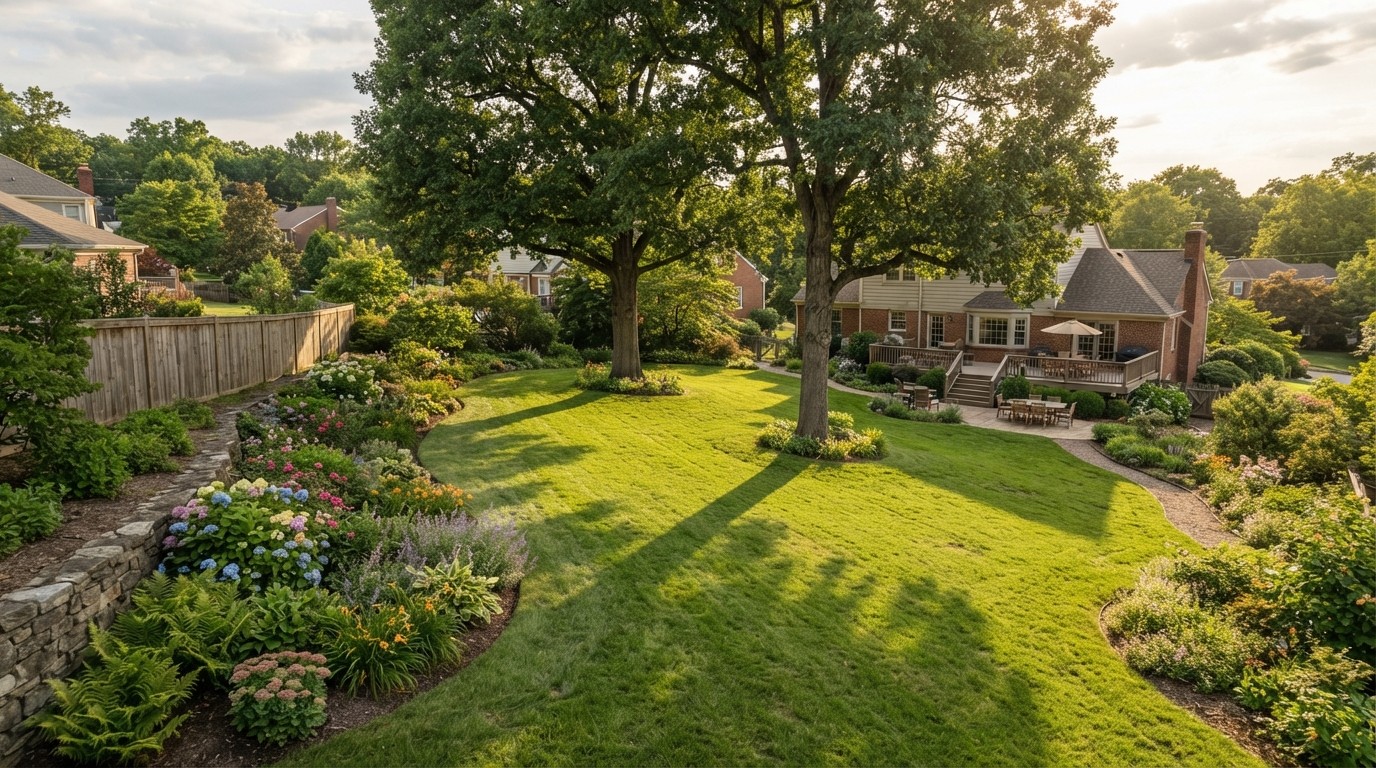
Every robotic mower is sold with a number: the lawn area it can manage. It sits prominently on the box and in the model name, and it is the figure most buyers use to choose. It is also the number most likely to mislead.
The rated area is what the machine can cover on an open, flat, well-shaped lawn, in good conditions, running its full schedule. Almost no real yard meets that description. Sizing a mower means translating the rating into what it can do on your lawn.
What the rating really means
Manufacturers calculate rated area from how much ground the machine can cut in a day, given its cutting width, speed and battery. A mower runs until the battery needs charging, returns to the station, charges, and goes out again. How much grass it covers in a day depends on how long it runs and how long it charges.
That rating assumes very little time is wasted. In practice, time is lost in several ways: travelling between the station and the lawn, turning at the boundary, avoiding obstacles, climbing slopes at slower speed, and covering the same ground more than once, since coverage is rarely perfectly efficient. The more time spent not cutting, the less area the machine can look after.
Grass growth adds another demand. In spring and early summer, when turf grows fast, the mower has to cut more each day to keep up. A machine adequate in August may fall behind in May.
Measure the real area
- Measure the lawn, using a measuring wheel, a tape, or the area tool on a mapping website that lets you draw a shape over a satellite image.
- Subtract what the mower will not cut: flower beds, patios, sheds, ponds, trees with surrounding beds, and any area you will keep separate.
- Note separate zones. If the lawn is divided into front and back, or into sections joined by narrow passages, the mower may need to be able to reach each. Some models can be moved between zones or can drive between them automatically; others cannot.
- Note unusually difficult areas separately, so you can judge how much of the lawn they take up.
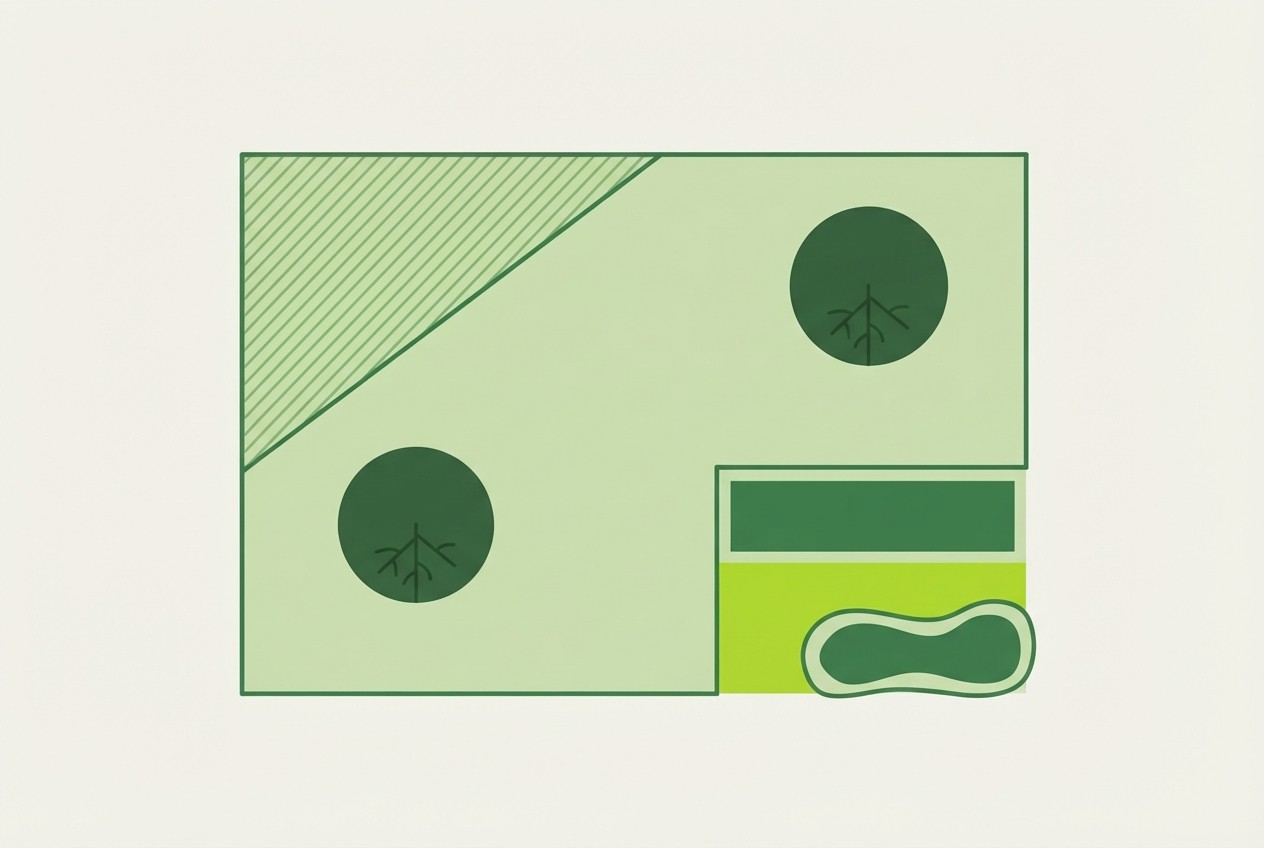
It helps to sketch the lawn on paper and mark each of these features. A drawing exposes problems that a single area figure hides.
Slope
Slope affects robotic mowers in three ways. They slow down going uphill, reducing area covered. Wheels can slip on wet or loose turf, so a slope that is manageable when dry may defeat the machine after rain. And a steep side slope, where the mower travels across the slope rather than up it, makes it harder to hold a line.
Manufacturers state the maximum slope their machines can handle, normally as a percentage. A percentage describes the rise over the run: a slope of one foot of rise over ten feet of horizontal distance is ten percent. People often confuse percentage with degrees, and the numbers are very different, so read the specification carefully.
To check yours, place a long straight board on the slope, level it with a spirit level, and measure the height from the board’s end to the ground. Divide the height by the length of the board. Do this at the steepest points of the lawn, not at the average.
Treat the stated maximum as a ceiling, not a target. A mower will often manage steeper slopes in short sections than across a whole lawn, and manufacturers’ figures usually apply to dry grass. Where a slope runs down toward a road, a pond or a drop, extra care is needed, because a mower that slides in the wrong place may leave the lawn entirely. Some machines have dedicated settings for slopes and edges, and the manual describes how the boundary should be set near them.
Passages and obstacles
Narrow gaps between beds, walls or fences are among the most frequent causes of trouble. A mower needs a minimum width to pass through, set by the manufacturer, and the boundary wire or virtual boundary takes up some of it. A gap that looks wide enough to walk through may be too narrow for the machine to enter with its boundary margin. Check the stated minimum passage width and measure yours.
Obstacles slow the mower and cost area. A tree with a bed around it is an island the machine must navigate round. A trampoline, a play frame, a shed and garden furniture all break the lawn into smaller pieces. Each obstacle also adds boundary and complexity to installation.
Trees deserve a note. The machine can usually mow around the base of an established tree, but exposed roots, low branches and fallen fruit all cause problems. Some owners mark a keep-out area around trees to avoid damage to the machine.
What each factor does to capacity
| Factor | Effect on usable capacity | What to do |
|---|---|---|
| Steep or uneven areas | Slower, more slipping, risk of leaving the lawn | Check slope against the specification; plan edge and boundary settings carefully |
| Narrow passages | Access problems, wasted time | Measure against the stated minimum width |
| Many obstacles | More turning, more boundary, less area cut per hour | Reduce or group obstacles; accept lower capacity |
| Multiple zones | Transport time, charging distance | Choose a model that handles zones; consider station placement |
| Fast spring growth | More cutting needed each day | Size for peak season, not for August |
| Wet weather | Reduced traction and mowing time | Allow margin for lost days |
The practical advice is simple: choose a mower whose rated area comfortably exceeds your measured area, rather than one that matches it. A comfortable margin means the machine can keep up in spring, lose a few days to rain, and still have time to recover. A mower working at the limit of its rating will do so all season and wear faster.
How much margin you need depends on how difficult the lawn is. A plain, open lawn needs little. A lawn with slopes, obstacles and zones needs a good deal more. If a dealer will survey the yard, accept the offer, and ask directly what they would size for it.
Other things that affect the choice
- Cutting height range. Check that the machine can cut at the height your lawn is kept.
- Edge cutting. Some machines get closer to edges than others, which reduces trimming. Compare the claims, and check reviews.
- Number of charging stations. A larger or divided lawn may benefit from a second station, if the model supports it.
- Weather resistance. Look at how the machine handles rain, and what it does when the lawn is wet.
- Controls and app. A schedule you can tune easily matters on a lawn with variable conditions.
- Service availability. A machine you cannot get serviced locally is a risk, whatever the specification says.
A short sizing routine
- Sketch the lawn and mark slopes, passages, trees, beds and separate zones.
- Measure the real mowing area after subtracting what the machine will not cut.
- Measure the steepest slopes and the narrowest passages.
- Check each against the specification of the models you are considering.
- Choose a model rated for noticeably more area than you measured, and more again if the lawn is awkward.
- Confirm with a dealer who knows your area and the models they sell.
A mower sized with margin spends its life comfortably ahead of the grass. One sized to the number on the box spends it trying to catch up.
Myths worth retiring
Myth: The number on the box is my lawn size.
Reality: It is a best case on open, flat grass. Slope, passages, obstacles and spring growth all reduce what the machine can really cover.
Myth: Slope percentages and degrees are the same thing.
Reality: They are not. A ten-percent slope rises one foot over ten feet, which is far gentler than ten degrees.
Myth: Bigger is always better.
Reality: A mower sized with margin works comfortably. One far larger than you need costs more and adds nothing on a small, simple lawn.