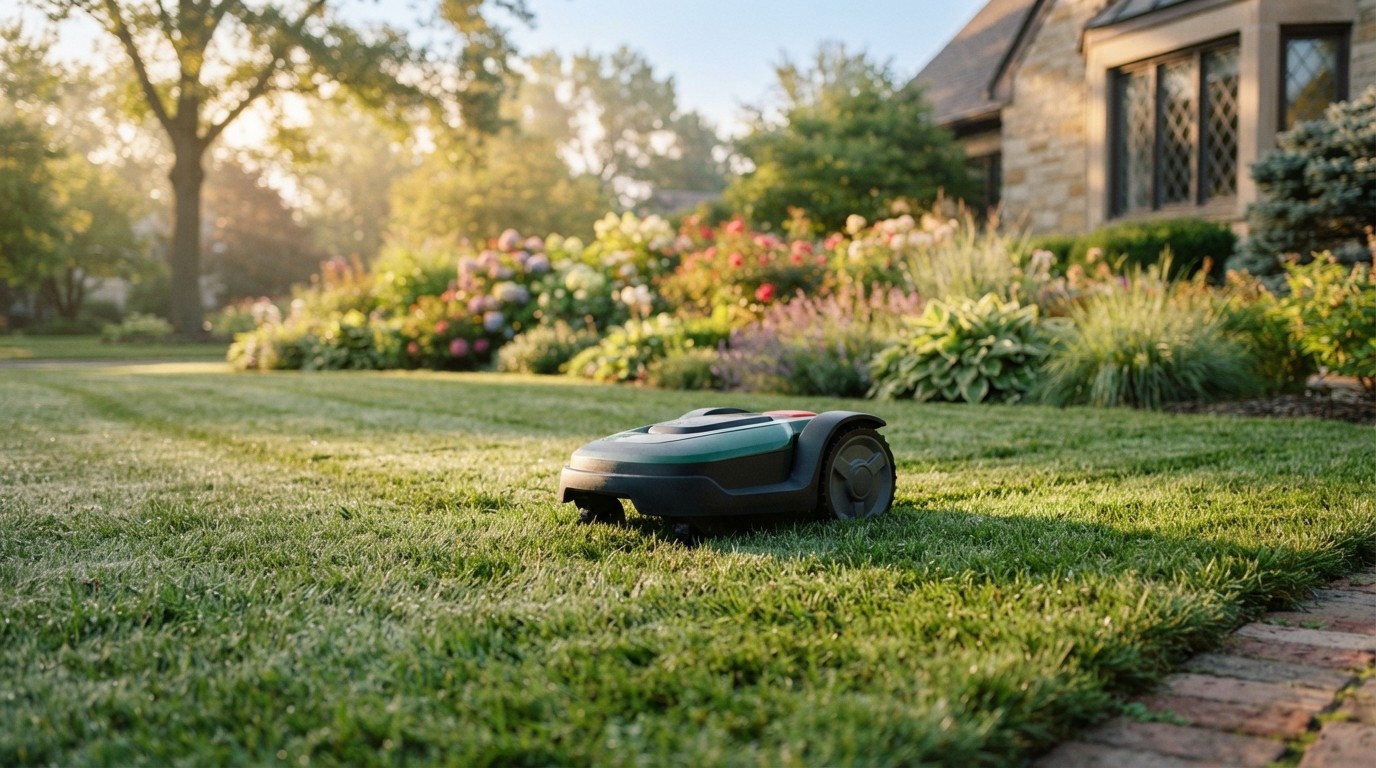
A robotic mower looks like a small, low, quiet vehicle that wanders around the lawn and returns to a charging station on its own. It is easy to think of it as an ordinary mower with a brain, and that misses what makes it work. A robotic mower is a different way of cutting grass, built on different assumptions, and it succeeds or disappoints depending on whether your lawn fits those assumptions.
This guide explains how the machines work, how they find their way, and what kind of yard suits one.
A homeowner unboxes a robotic mower on Saturday, pegs a wire round the lawn by lunchtime, and by Sunday is watching it circle one corner it cannot leave. The mower was fine. The corner was a steep bank, and nobody had checked the slope.
A different way of mowing
A conventional mower cuts a lot of grass at once, once a week. A robotic mower cuts a small amount every day, or every other day. Instead of one large blade removing several inches, it uses small blades that trim a fraction of an inch at a time.
That difference has practical consequences. The clippings are tiny, so they fall into the turf and break down, returning nutrients to the soil rather than needing to be bagged and hauled away. The lawn is never cut hard, so it is less stressed than one that is scalped on weekends. And because the machine works all the time, in short bursts, there is no mowing day at all.
The trade-off is that a robotic mower cannot cope with neglect. It is built to maintain a lawn that is already at the right height, not to fight long grass. A first cut with a conventional mower is part of getting started.
How they navigate
A robotic mower needs to know three things: where its lawn ends, where it is within it, and where home is. Different machines answer these in different ways, and our article on wired and wire-free systems covers them in depth. In outline:
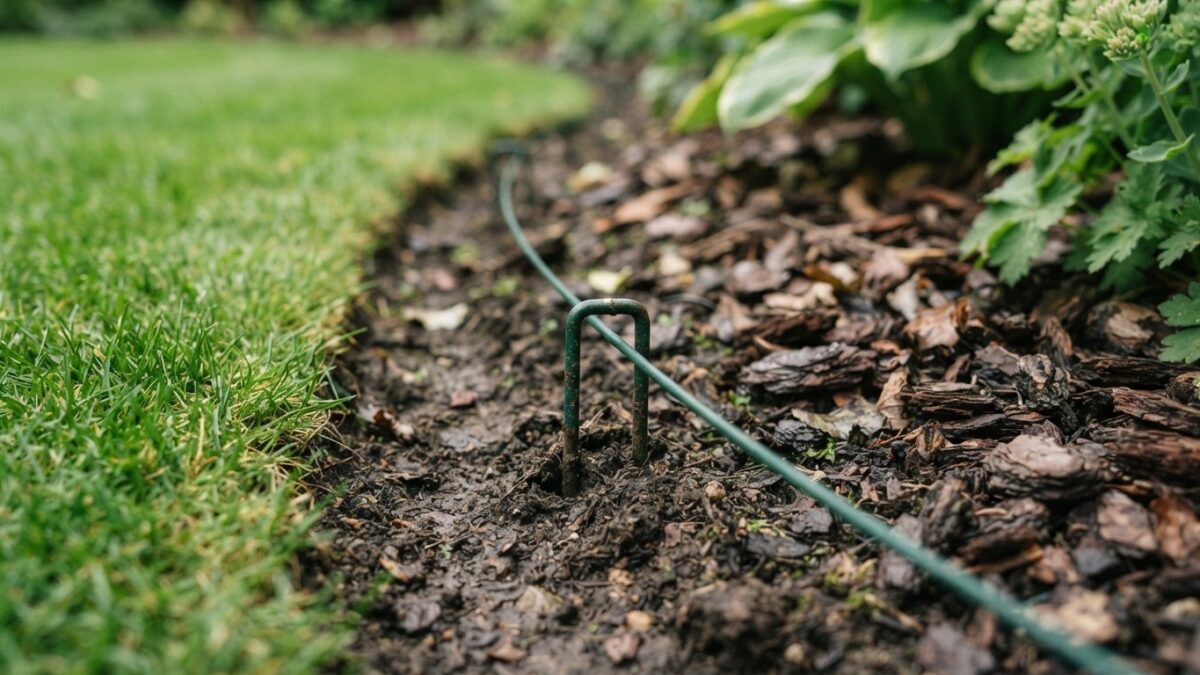
- A boundary wire. A low-voltage cable laid around the lawn’s edge and around obstacles. The mower detects the signal in the wire and turns back when it reaches it.
- Satellite positioning. The mower determines its position with satellite signals, often with correction from a nearby reference, and you draw a virtual boundary on a map in an app.
- Cameras and vision. The machine recognises grass, edges and obstacles with cameras, and combines this with other sensors.
- Beacons. Small posts placed around the yard that the mower uses to triangulate its position.
Whatever the method, the mowers also carry sensors for contact and for lifting and tilting. Contact sensors let them bump softly into obstacles and turn. Lift and tilt sensors stop the blades if the machine is picked up or flips. Rain sensors send it home in wet weather, though many people prefer to set the schedule so that it does not mow wet grass.
Random or planned paths
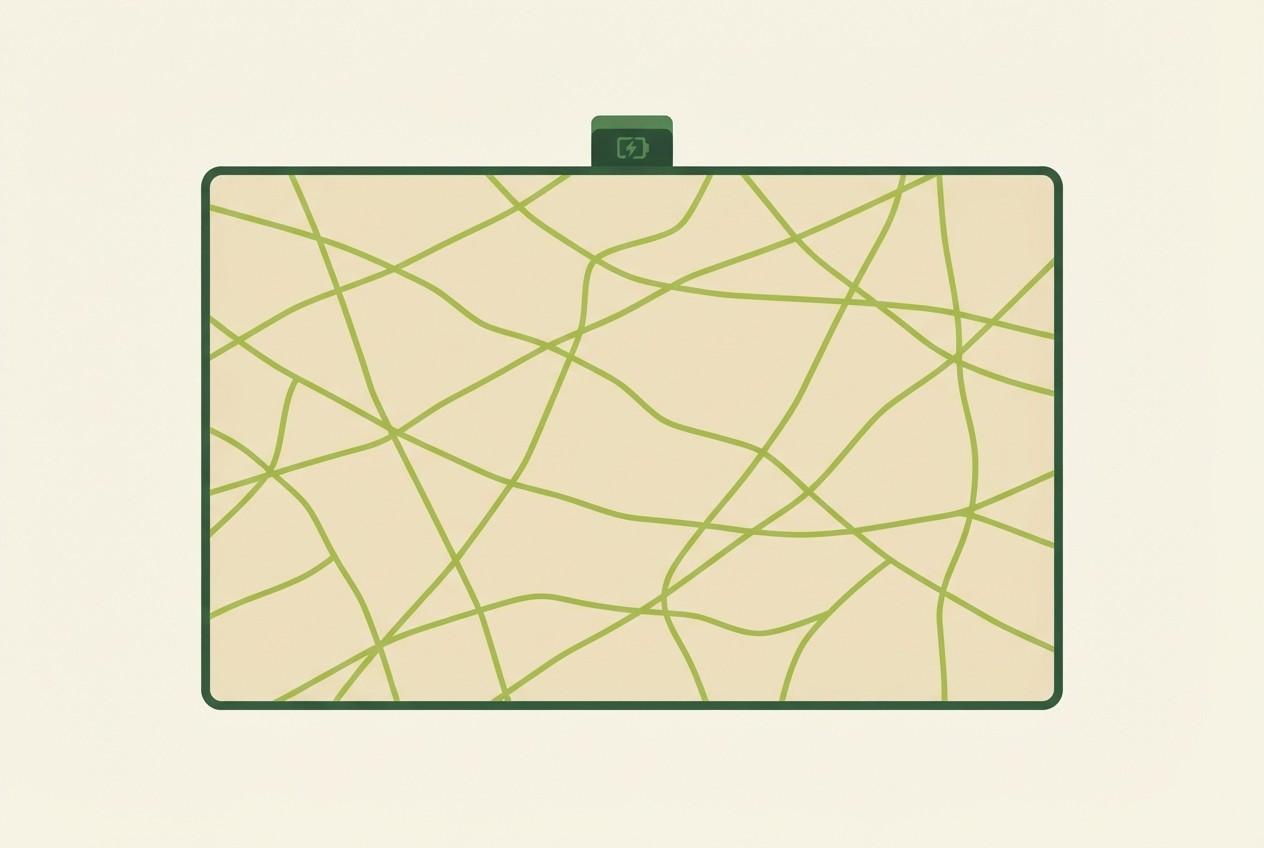
Watching a robotic mower for the first time can be unsettling. Many simply wander in what looks like a random zigzag, changing direction at the boundary or when they meet an obstacle. It looks inefficient, and for a single pass it is, but over days the coverage evens out, and the machine’s work is frequent and light enough that it does not matter.
More advanced machines, particularly those with satellite or vision-based positioning, can plan systematic paths, mowing in neat parallel lines. That produces stripes, covers the area faster, and can look better, though the practical difference to the health of the lawn is small.
What makes a lawn a good fit
| Feature | Good fit | Poor fit |
|---|---|---|
| Shape | Open, regular, with wide passages between areas | Many narrow channels and tight gaps |
| Slope | Gentle to moderate, within the machine’s stated limit | Steep banks, especially near roads, ponds or drops |
| Obstacles | A few trees and beds that can be fenced off with the boundary | Dozens of small obstacles, loose toys, garden furniture left out |
| Surface | Even turf | Deep holes, roots, large stones or severe lumps |
| Sky and tree cover | Open, for satellite systems | Dense canopy, for satellite systems |
| Grass | Maintained at moderate height | Tall, neglected, or very thick |
| Size | Within the machine’s stated capacity with margin | At or beyond capacity |
Lawn size deserves its own treatment, and we cover it in our guide to sizing a mower. In short, the area a manufacturer states is a best case on an open lawn, and real yards cut it down.
What they do not do
- Trim the edges. A robotic mower stops a short distance from boundaries, fences and walls, leaving a narrow uncut strip. Most owners still use a trimmer along these edges, perhaps once every week or two.
- Cope with tall grass. A lawn that has gone to seed has to be cut by a conventional mower first. The robotic mower can then keep it down.
- Clear debris. Sticks, toys, hoses and fallen fruit stop or damage the machine. A lawn needs to be kept reasonably clear.
- Replace all lawn care. Feeding, weed control and watering still matter. Healthy turf is easier for any mower to manage.
- Run entirely without attention. Machines get stuck, wires break, and software needs updating. Expect to check in.
Noise, wildlife and safety
Robotic mowers are quiet compared with petrol machines, which is a real benefit for neighbours and for people who work from home. They are not silent, and some are noticeably louder than others.
Small animals and children are an area where we cannot make promises. Mowers are designed with sensors, and their blades are small and typically stop when the machine is lifted or tilted. But no robot is guaranteed safe around any particular animal or child, and many manufacturers advise against running machines at night in places where small wildlife is active. Follow the manual, think carefully about when the machine runs, and keep children and pets away from it while it is working.
Mowers also carry security features such as PIN codes, alarms and location tracking, because they are attractive to thieves. Enable them.
Is a robotic mower right for you?
- Do you mind the weekly mow, or just the weekend it takes? If you enjoy the mowing, a robot will take away something you like.
- Is your lawn reasonably open and in a size range these machines handle? Walk it and note the steep parts and narrow gaps.
- Will you accept some set-up effort and ongoing attention? The first weeks need tuning.
- Can you keep it reasonably clear of toys and clutter? It will meet whatever is in its path.
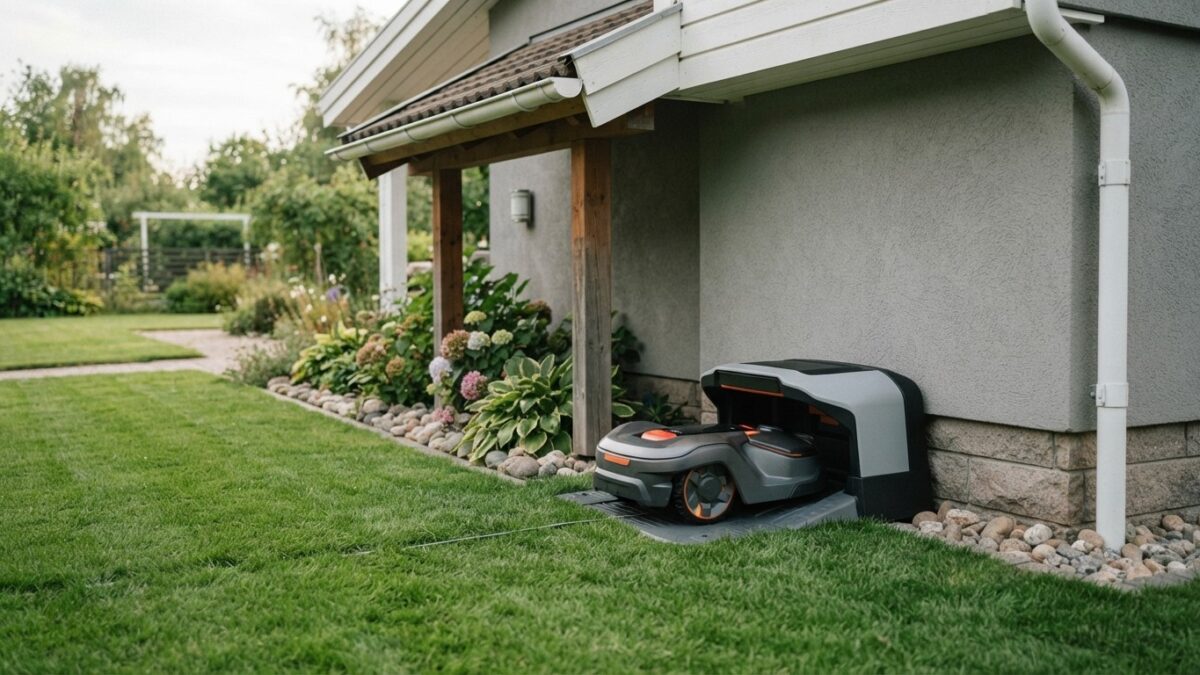
- Is there a sheltered, level place for the charging station near an outdoor outlet? If one has to be added, that is a job for a licensed electrician.
- Are you comfortable still using a trimmer on the edges?
If the answers are mostly yes, a robotic mower is likely to repay the effort of installing it. If your lawn is steep, crowded or rough, a different approach, or some changes to the lawn first, may serve you better. We would rather say so now than after you have unboxed one.
Mistakes we see most often
- Expecting it to cope with long grass instead of cutting it first with a conventional mower.
- Forgetting the edges: keep a trimmer for the strip the robot leaves.
- Leaving toys, hoses and fallen fruit on the lawn.
- Skipping the theft protections such as the PIN code and the alarm.